
Routine Oil Analysis has been common-place in commercial and industrial applications for years. Everyday, each passenger aeroplane in the sky has its oil sampled and checked. We recommend a small sample of oil is taken prior to an oil change or every 12 months to give an overall picture of your engine’s health from the inside, out. More and more engine manufacturers are now making oil sampling a criteria of their service protocol.
An experienced laboratory will carry out a number of tests on the sample and issue a detailed report listing the presence of various chemicals and metal elements. This includes:
- Full spectrographic analysis of wear metals, oil additives, contaminants by ICP (ASTM D5185). Readings are given in ppm (parts per million).
- Total ferrous debris (FW/PQ), including large particles using a 51FW meter. Units are dimensionless.
- Viscosity at 40oC and 100oC (ASTM D445), and Viscosity Index. Units in Centistokes (cSt).
- TIM (Total Insoluble Matter) given as ‘% insoluble’. Or infrared analysis of engine samples to monitor oil condition and degradation. Reported as ‘% allowable’. ‘Caterpillar method.’
- Water analysis (ASTM D1744).
Oil analysis: What are the benefits?
As part of a long term plan, regular testing will allow you to build up a picture of your engines health, a little like a regular check up at your doctors. The results can help you plan for upcoming maintenance, prevent catastrophic mechanical failure, preserve resale value of your vessel or give you in insight into the condition of an engine when purchasing a new vessel.
- A reliable, cost effective service without the need for expensive engineer bills.
- Expert and informative reporting on engine / gear / hydraulic wear
- Open access to free consultation and support
- Reduced overall costs / long term cost benefits
- Unbiased / Impartial oil analysis
- Support with failure analysis, warranty and historical investigations
Oil analysis : How much does it cost?
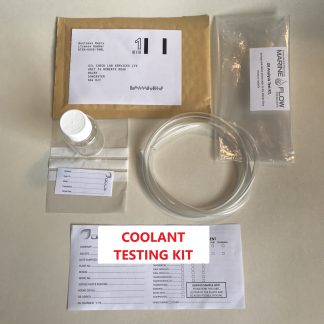
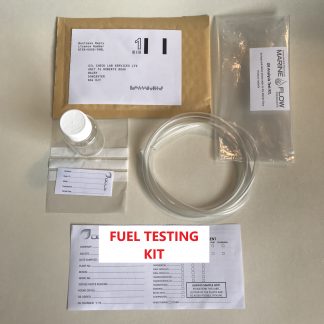
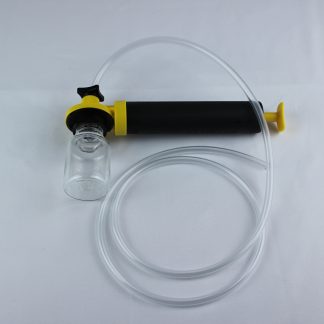
The Marine Flow Products DIY sample kit contains everything you need for a detailed lab report. You get step by step instructions, a sample pot and label, sampling form to be completed by the user, prepaid jiffy bag to send the sample back to the lab and a length of suction hose for use with our specific extraction pump (available separately).
Oil sample kit: £36.00
Oil extraction Pump: £49.00
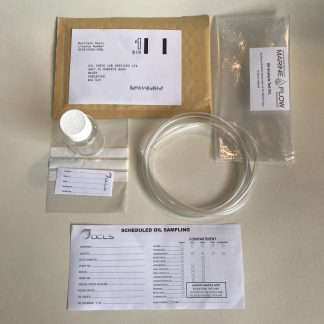
We also offer comprehensive Fuel and Coolant testing for £39.00

Fuel and coolant testing.
Our standard fuel checks cover the fundamentals and problems that inflict about 90+% of all fuel related issues and problems.
- Water in fuel,
- Dirt from tank and foreign matter.
- Micro-organisms.
- Poor fuel quality as density, flash point.
- Bio-diesel content
Coolants vary in their make up and longevity. A typical coolant/antifreeze test will include the following:
- Corrosion inhibitor loss.
- Overall condition of the coolant.
- pH.
- Nitrite.
- Colour.
- Smell.
- Precipitation.
- Rust presence.
- Conductivity.
- Foaming.
- Glycol content.
Sample reports and guides can be downloaded below.